
A rate cut by the Reserve Bank is likely to help the rupee, which today hit a record low of 57.54 versus dollar, says a Bank of America Merrill Lynch (BofA-ML) report.

The rupee is expected to remain under pressure in the near term, given the strengthening of the dollar against major global currencies and widening of the trade deficit.

Asian markets were trading mixed with shares in China witnessing profit taking after sharp gains in the previous session.

According to the IHS Markit India Business Outlook, predictions of softer activity growth underpin the downward revisions of profit outlook, subdued hiring plans and relatively muted capital expenditure.

Despite the possibility of the economy bottoming out, the investment cycle could remain weak for another couple of years and earnings downgrades should continue.

Leading computer makers, including Lenovo and HP, are set to hike prices of their products by up to 10 per cent in coming weeks, hit by increasing input costs due to rupee's southward journey.

The current capital flight is a short-term phenomenon, the agency said.

Indian companies will have to repay overseas debt worth $7.5 billion in the June quarter.

Gold, forex assets, IT sector, pharma. Devangshu Datta explains why each of these is a good hedge against market shocks at this time.

Equity benchmark Sensex tumbled 674 points on Friday, weighed by losses in banking stocks as an unabated spike in new coronavirus cases fuelled uncertainty over the economic impact of the pandemic. After hitting a low of 27,500.79 during the day, the 30-share BSE barometer ended 674.36 points or 2.39 per cent lower at 27,590.95. The NSE Nifty shed 170 points, or 2.06 per cent, to finish at 8,083.80.
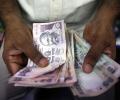
A firming trend in domestic stock markets, however, capped the rupee fall to some extent

The industrial production grew by two per cent in September, mainly on account of better performance by power and mining sectors.

'Macro headwinds are rising for Indian equities in the form of rising commodity prices, especially oil, depreciating rupee, fiscal challenges, election-related uncertainty and upside risks to inflation'
